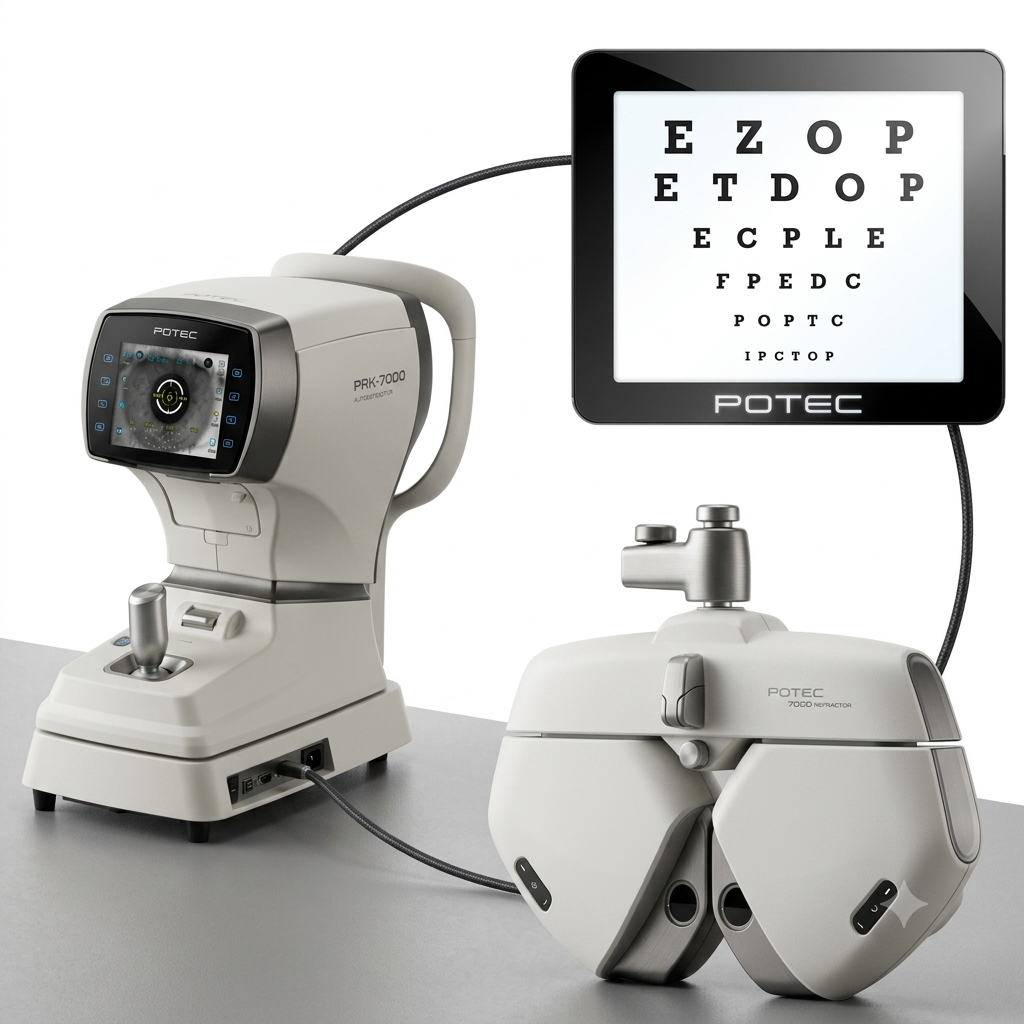

What Is Digital Refraction Technology?
Digital refraction refers to the use of computerized and digitally controlled systems to assess refractive errors such as myopia, hyperopia, astigmatism, and presbyopia.
Depending on the equipment and clinical setup, a digital refraction system may integrate tools such as:
- Digital visual acuity displays
- Automated refractors
- Digital phoropters
- Wavefront-based measurements
- Computerized prescription management
- Electronic patient records
- Interactive patient interfaces
These technologies can work together to make the refraction process more organized and data-driven while allowing the eye-care professional to make the final clinical decisions.
1. Improves Examination Efficiency
One of the biggest advantages of digital refraction is improved workflow efficiency.
Traditional refraction can involve repeated lens changes, manual adjustments, and recording results separately. Digital systems can automate or simplify many of these steps.
For busy ophthalmic practices, this can help reduce unnecessary delays and allow clinicians and staff to manage more patients without compromising the quality of the examination.
A streamlined workflow can be particularly valuable in practices with high patient volumes.
2. Provides More Consistent Measurements
Manual procedures can sometimes be affected by differences in technique, environmental conditions, or patient responses.
Digital systems are designed to provide standardized testing conditions and repeatable measurements. This can help practitioners obtain more consistent data during the refraction process.
However, technology should support—not replace—the clinical expertise of the eye-care professional. Final prescription decisions should always consider the patient's responses, visual needs, ocular health, and clinical findings.
3. Enhances the Patient Experience
A modern eye examination should be accurate while also being comfortable and easy for patients to understand.
Digital refraction systems can provide interactive visual displays and simplified testing procedures. Patients may find it easier to compare visual options and communicate which image appears clearer.
For patients who are unfamiliar with traditional refraction procedures, a digital interface can make the examination feel more modern and engaging.
4. Helps Reduce Manual Errors
Recording examination findings manually can introduce the possibility of transcription mistakes.
Digital refraction systems can automatically record and transfer measurements, depending on the equipment and software configuration. This can reduce repetitive data entry and help maintain organized patient records.
Better digital documentation can also make it easier for clinicians to review previous prescriptions and compare changes over time.
5. Supports Better Practice Workflow
Digital refraction can integrate with other technologies used within an ophthalmic practice.
For example, examination data may be connected with:
- Electronic medical records
- Optical dispensing systems
- Patient management software
- Diagnostic devices
- Digital appointment systems
- Prescription databases
This type of integration can reduce duplicated work and help create a smoother journey from examination to prescription and eyewear selection.
6. Makes Patient Communication Easier
Explaining refractive changes to patients can sometimes be challenging, particularly when the difference between two prescriptions is small.
Digital systems can provide a more interactive examination experience, allowing patients to participate in the comparison process.
When patients can clearly understand what they are seeing and why their prescription may have changed, they may feel more confident about the recommendations provided by their eye-care professional.
7. Useful for Modern, High-Volume Practices
Ophthalmic practices are becoming increasingly technology-driven. As patient numbers grow and expectations for faster service increase, efficient diagnostic workflows become more important.
Digital refraction can help practices organize routine vision assessments while reducing unnecessary manual steps.
This can be particularly useful for:
- Ophthalmology clinics
- Optometry practices
- Eye hospitals
- Optical stores with clinical services
- Multi-location eye-care networks
- Practices adopting digital patient records
8. Helps Create a More Modern Clinical Environment
Patients increasingly expect healthcare services to use modern technology.
Introducing digital refraction equipment can contribute to a more advanced clinical environment and demonstrate a practice's commitment to innovation.
However, technology alone does not define the quality of an eye-care practice. The combination of experienced professionals, appropriate diagnostic equipment, accurate clinical assessment, and patient-focused care remains essential.
9. Can Support Personalized Vision Assessment
Every patient has different visual requirements.
A person who spends most of the day working on a computer may have different visual needs from someone who drives frequently, plays sports, or performs detailed near-work.
Digital refraction technology can provide additional measurement data that practitioners can use alongside clinical history and examination findings to develop an appropriate prescription for the patient's individual requirements.
10. Saves Time for Both Staff and Patients
When routine refraction procedures become more efficient, both patients and clinical staff can benefit.
Reduced manual adjustments, automated data recording, and integrated workflows can help shorten certain parts of the examination process.
The time saved can then be used for more meaningful patient interaction, clinical assessment, education, or other practice activities.
Digital Refraction vs. Traditional Refraction
Digital technology does not necessarily mean that traditional clinical methods are becoming obsolete.
Instead, digital refraction should be viewed as a tool that enhances the capabilities of eye-care professionals.
Traditional subjective refraction remains an important part of determining a patient's prescription. Digital systems can complement this process by providing automated measurements, improving workflow, and supporting more efficient documentation.
The most effective approach is often a combination of advanced technology and professional clinical judgment.
What Should an Ophthalmic Practice Consider Before Investing?
Before selecting a digital refraction system, practices should consider more than just the equipment's features.
Important factors include:
- Measurement capabilities
- Ease of use
- Compatibility with existing equipment
- Electronic medical record integration
- Staff training requirements
- Patient interface
- Data security
- Maintenance and technical support
- Scalability for future needs
- Total cost of ownership
Choosing technology that fits the practice's workflow is often more valuable than selecting equipment based solely on the number of features it offers.
The Future of Digital Refraction
As ophthalmic technology continues to evolve, digital refraction is likely to become increasingly connected with other diagnostic and practice-management systems.
Artificial intelligence, cloud-based records, automated measurements, advanced imaging, and data analytics may further improve how eye-care professionals collect and use clinical information.
The future of refraction is therefore not simply about replacing manual procedures with machines. It is about creating smarter, more connected, and patient-focused eye-care workflows.
Conclusion
Digital refraction technology can bring significant benefits to a modern ophthalmic practice. From improving workflow efficiency and measurement consistency to enhancing patient communication and digital record management, it can help practices deliver a more streamlined examination experience.